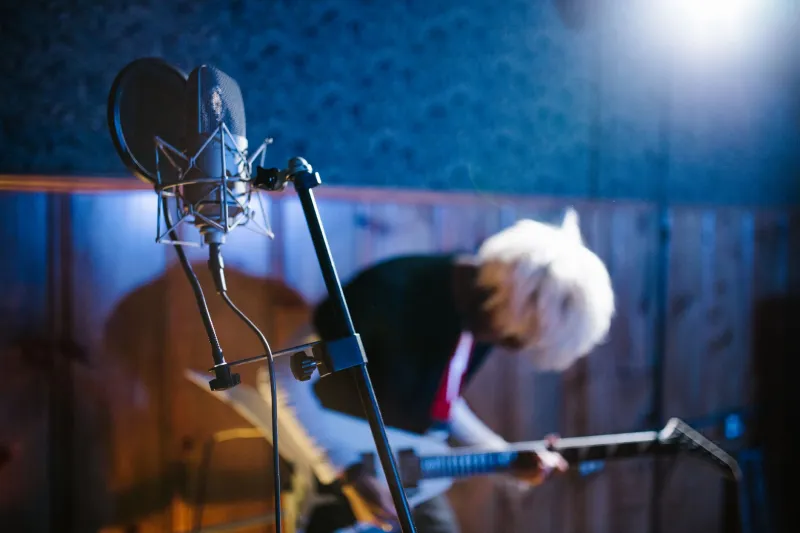
Small Rooms, Big Sounds: Why the 300-Cap Venue Is Becoming Rock's Most Important Address

There's a venue in East Nashville called The 5 Spot that holds maybe 200 people on a good night. The stage is barely elevated. The sound system is solid but not spectacular. There's no VIP section, no bottle service, no Jumbotron. On any given Tuesday, you might catch a band that's three months away from blowing up — or a road-worn act with three albums and a fiercely loyal following that wouldn't trade this room for a shed show if you paid them.
Across the country, in cities from Portland to Philadelphia, venues like The 5 Spot are becoming something they haven't been in a long time: essential.
The Arena Isn't Going Anywhere — But Something Has Shifted
Let's not overstate the case. Massive tours still move massive numbers. Bruce Springsteen, Foo Fighters, Metallica — these acts still fill stadiums and generate the kind of ticket revenue that makes the music industry's quarterly reports look healthy. The spectacle of a 70,000-seat arena show isn't going away.
But below that stratosphere, something interesting is happening. A growing number of mid-tier and even established rock acts are deliberately routing around the mid-size amphitheater circuit in favor of tighter, more intentional runs through independent venues. And newer artists are skipping the traditional arena-trajectory altogether, choosing to build their audiences one small room at a time.
The reasons are tangled up in economics, culture, and something harder to quantify — a genuine hunger for connection that big venues have always struggled to provide.
The Economics of Intimacy
Here's a counterintuitive truth about touring: bigger doesn't always mean more profitable, especially for bands that aren't quite at the headlining-amphitheater tier. Mid-size venues come with mid-size production costs. You need more crew, more equipment, more everything. Promoter splits get more complicated. Ticket prices climb to cover costs, which can alienate the exact fans you're trying to hold onto.
A lean run of 20 sold-out 400-cap rooms, by contrast, can be remarkably efficient. Lower overhead, tighter logistics, and an audience that paid a reasonable price to be there — which tends to mean they're really there, not just in the building.
"We did a run last year, all theaters and clubs, nothing over 600 seats," says the tour manager for a Pacific Northwest rock band who asked not to be named because they have major label conversations ongoing. "Every show sold out in advance. The energy was unreal. We probably made more per show than we would have playing half-empty 2,000-cap rooms."
The Venue Owners Holding the Scene Together
Behind every great small venue is usually one or two people who are deeply, possibly irrationally, committed to keeping it alive. These aren't corporate operations. They're passion projects that happen to have a liquor license.
Take Kung Fu Necktie in Philadelphia, a 200-capacity club in the Fishtown neighborhood that's been a launchpad for regional and touring acts for over a decade. Or The Casbah in San Diego, which has operated since 1989 and has hosted everyone from pre-fame Nirvana-era acts to current indie rock favorites. Or The Earl in Atlanta, where the bar serves food and the stage is in the back room and the whole setup feels like someone's very cool house party.
These venues survive on thin margins, community loyalty, and the understanding that what they provide can't be replicated at scale. "We're not trying to compete with the big rooms," says one venue co-owner in Columbus, Ohio. "We're doing something different. We're the place where you see a band for the first time and never forget it."
That first-time experience is genuinely irreplaceable. The rock fans who still talk about seeing a future-legend in a tiny club before they broke — there's a specific kind of pride attached to that story. Small venues manufacture those moments constantly.
Artists Are Choosing the Room
What's changed more recently is that artists with options are actively choosing the small room. Not because they have to — because they want to.
Jamie Lenman, a UK rock artist with a cult US following, toured a handful of intimate American venues last year and was explicit about why: "I could probably play bigger rooms in some of these cities, but I don't want to. I want to see faces. I want to be able to hear the audience singing back. That's what this is supposed to feel like."
That sentiment echoes across a lot of conversations with touring musicians right now. Post-pandemic, after two-plus years without live music, there's been a recalibration of what performing actually means. The artists who came back to the road with the most renewed sense of purpose seem to be the ones gravitating toward intimacy.
Social media has accelerated this too. A truly electric small-room performance — the kind where something happens that couldn't have been planned — gets captured, shared, and spreads in ways that a polished arena production often doesn't. Authenticity travels.
What This Means for Rock's Next Chapter
The health of rock music has always depended on the pipeline: small venues feed medium venues feed large venues, and the whole ecosystem moves artists up the ladder while continuously introducing new ones at the bottom. When that pipeline gets clogged — when mid-size venues shutter, when independent clubs can't afford to stay open — the whole structure gets shaky.
The current moment, with its renewed appreciation for the small room, feels like a corrective. Fans are showing up. Artists are showing up. And the venues that have stubbornly refused to close, even through the brutal years of the pandemic, are being rewarded with something that feels a lot like a second wind.
Rock music has never been a stadium-first art form, not really. It grew up in clubs, in bars, in church basements and converted warehouses. The 300-cap venue isn't a step down from the arena — it's where the music was always most itself.
The sticky floors and the low ceilings and the band close enough to make eye contact with — that's not a compromise. That's the point.