Pressed and Obsessed: The Real Reason Rock Fans Are Dropping $30 on Records They Already Own
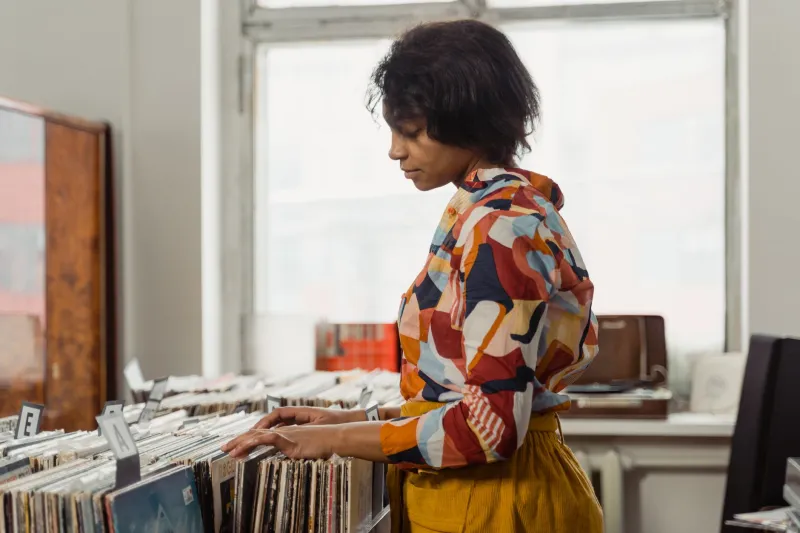
Let's be honest about the math for a second. A standard 180-gram vinyl reissue of a classic rock album will run you somewhere between $25 and $40 at your local record store. That same album is sitting on Spotify, Apple Music, or YouTube — right now, for free, or close to it — in high-fidelity digital audio that most people's ears couldn't distinguish from an analog source even if they tried. And yet, vinyl sales have climbed for 17 consecutive years, according to the RIAA, with 2023 marking the first time since the 1980s that vinyl outsold CDs in the US.
Something deeper than nostalgia is driving this. A lot deeper.
The Playlist Problem
Spotify's algorithm is genuinely impressive. It will serve you a Discover Weekly playlist that feels eerily personal, threading together artists you love with ones you've never heard. But ask any committed vinyl collector what they think of algorithm-curated listening, and you'll get a reaction somewhere between mild annoyance and full-on existential dread.
"It decides everything for you," says Marcus Webb, 29, who runs a small vinyl trading community out of Austin, Texas. "There's no intention behind it. You're just getting fed. With a record, you chose it. You paid for it. You drove to the store or waited for the mail. That whole process means something before the needle even drops."
That sense of intentionality is a recurring theme among collectors across age groups. The act of choosing an album — physically selecting it, bringing it home, cleaning it, placing it on the platter — creates a kind of ceremony around listening that streaming simply doesn't replicate. In a culture increasingly defined by passive consumption, vinyl demands active participation.
Why Gen Z Is Showing Up to the Party
Here's the part that surprises a lot of people: Millennials didn't revive vinyl alone. Gen Z — the generation that grew up entirely within the streaming era — is now one of the fastest-growing demographics buying records. Record Store Day, the annual April event that draws lines around the block at independent shops across the country, has skewed noticeably younger over the past five years.
Ashley Tran, 22, works part-time at Permanent Records in Chicago and started collecting two years ago. She'd never owned a turntable before. "I got into it because of a Taylor Swift colored vinyl drop, honestly," she says with a laugh. "But then I started digging into the rock section and just... didn't stop. There's something about holding a Led Zeppelin record that makes the music feel more real. Like it has weight. Literally and figuratively."
This tactile quality is part of what researchers call the "ownership effect" — the psychological tendency to assign higher value to things we physically possess. When you own a record, you have a relationship with it. You know which pressing it is. You remember where you bought it. You can see it on your shelf and feel good about it even when it's not playing.
Streaming libraries don't work that way. You have access to everything, which paradoxically makes nothing feel especially precious.
The Record Store as Community Hub
Walk into a well-curated independent record store on a Saturday afternoon and you'll notice something that no streaming app can manufacture: people actually talking to each other about music. Debating pressings. Swapping recommendations. Getting into mild arguments about whether the Mobile Fidelity remaster of Rumours is worth the premium price.
Stores like Amoeba Music in Los Angeles, Grimey's in Nashville, and Waterloo Records in Austin have become genuine cultural anchors in their cities. They're not just retail spaces — they're venues, community boards, and informal schools for music discovery.
"We sell records, sure, but what we're really doing is keeping a conversation going," says Dave Hopper, who's managed a mid-sized independent shop in Denver for 11 years. "People come in here and spend two hours. When's the last time someone spent two hours on Spotify just browsing?"
That community dimension matters especially in rock, where the culture has always been built around shared obsession. Knowing your stuff — understanding the difference between an original UK pressing and a domestic reissue, or being able to identify a record by its label — carries real social currency in collector circles.
The Sound Debate (It's Complicated)
Ask whether vinyl actually sounds better and you'll open a debate that has no clean ending. Audiophiles will passionately argue for the warmth of analog audio, the way a well-maintained record played on quality equipment captures nuances that digital compression strips away. Engineers and acousticians will counter that a 24-bit digital file objectively contains more sonic information than a vinyl groove.
Both sides are kind of right, and both are kind of missing the point.
For most people buying records today, the sound is only part of the experience. It's the ritual that surrounds the sound — the sleeve art you can actually read, the liner notes, the physical act of flipping the record at the halfway point — that makes the whole thing feel different. More complete. More human.
"Streaming is convenience," Marcus Webb puts it simply. "Vinyl is commitment."
What This Means for Rock Culture
The vinyl revival isn't happening in a vacuum. It's part of a broader cultural pushback against the ephemeral, scroll-and-forget nature of digital life. People are buying physical books again. Film photography is having a moment. And rock fans, maybe more than any other music community, have always had a complicated relationship with authenticity — with the idea that the music should mean something, should cost something, should require something.
Dropping $30 on an album you can stream for free isn't irrational. It's a statement. It says: this music matters enough to me that I want to own a piece of it. I want it to take up space in my home and my life. I want to be the kind of person who listens with intention.
In the age of infinite, frictionless content, that might be the most rock and roll thing you can do.