Swipe Right on Garage Rock: How TikTok Handed the Guitar Back to Gen Z
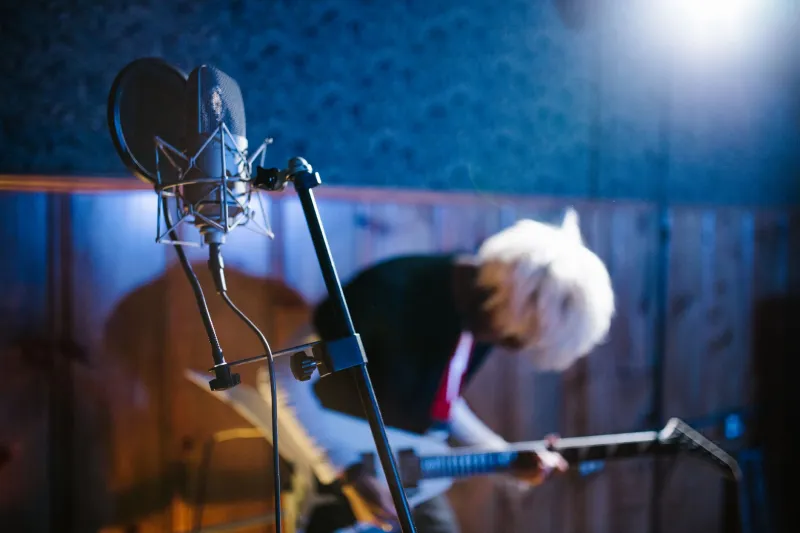
Nobody saw it coming — least of all the music industry. Between dance challenges and lip-sync videos, TikTok quietly became the unlikely incubator for a raw, analog-obsessed garage rock revival. Gen Z musicians are picking up beat-up guitars, recording on four-tracks, and racking up millions of views doing it. Rock isn't just alive on TikTok. It's loud, it's grimy, and it's absolutely thriving.
For years, the narrative was grim. Rock was supposedly on life support, gasping while pop and hip-hop dominated streaming charts. Then something weird happened. A teenager in Ohio posted a shaky phone video of herself shredding a fuzzy guitar riff in her parents' basement, and the internet lost its mind. The comments flooded in. The shares multiplied. And suddenly, a whole generation that had never owned a physical album was obsessing over the same lo-fi, stripped-back energy that made The White Stripes and The Strokes household names back in the early 2000s.
The Algorithm Didn't Kill Rock — It Accidentally Saved It
Here's the thing about TikTok's algorithm: it doesn't care about genre loyalty. It cares about engagement, authenticity, and that impossible-to-fake quality of something feeling real. And garage rock, by its very nature, is about as real as music gets. No Auto-Tune safety nets. No million-dollar studio polish. Just a riff, a beat, and whatever microphone is sitting on a cluttered desk.
That rawness translates insanely well in a 60-second vertical video. When a kid films themselves recording straight to a cassette four-track with a vintage Telecaster, the visual storytelling does half the work. Viewers aren't just hearing music — they're watching someone make something with their hands. In an era of hyper-produced content, that DIY grit hits different.
Bands like Amyl and the Sniffers, Dry Cleaning, and a wave of American acts like Dehd and Frog have all benefited from this organic TikTok momentum. Their videos — often grainy, often shot under a single lamp in a cramped apartment — rack up engagement that glossy major-label content struggles to match.
Analog Gear Is Having Its Main Character Moment
Walk through any Guitar Center in a major US city right now and ask a floor employee what's been flying off the shelves. Chances are they'll mention vintage-style fuzz pedals, reissue Jazzmaster guitars, and — this is the wild part — actual tape machines. Tascam Portastudios, once the domain of dusty pawn shops and eBay deep dives, are showing up in bedroom studios across the country.
TikTok creators have turned gear acquisition into content in itself. The "lo-fi recording setup" video is practically its own subgenre now. Creators walk their followers through a chain of battered, character-rich equipment the way a chef might walk through a recipe. There's a reverence for imperfection that feels almost countercultural — especially coming from a generation raised on Spotify's crisp, loudness-war mastered everything.
This isn't just aesthetic cosplay either. Plenty of these artists genuinely believe analog warmth produces a more emotionally honest sound. And when you hear some of the tracks coming out of these basement setups — the tape hiss, the room noise, the slightly-off-tempo drum fills — it's hard to argue with them.
Skipping the Gatekeepers Entirely
Maybe the most rock-and-roll thing about this whole movement is what these artists aren't doing. They're not sending demo tapes to A&R reps. They're not playing the showcase circuit hoping some industry suit catches their set. They're posting a clip on Tuesday night and waking up Wednesday with 200,000 new followers.
The traditional music industry pipeline — play local, get signed, get promoted, get heard — has been completely short-circuited. Independent artists are building audiences first, then figuring out the business side later. Some are licensing their music directly through platforms like DistroKid or TuneCore. Others are monetizing through Patreon, Bandcamp, and merch drops that sell out within hours of announcement.
This is the DIY ethos that punk and early indie rock preached but could rarely fully practice. Distribution was always the chokepoint. Now it isn't. A garage band in Tulsa, Oklahoma has the same global reach as a major-label act with a full promotional budget — provided they can make something worth watching.
The Sound That's Connecting
So what does this new wave actually sound like? It's a blender of influences, honestly. You'll hear the fuzzy, blown-out production of early Black Keys records sitting next to Velvet Underground-style drone. There's a lot of Pixies-influenced quiet-loud-quiet dynamics, and more than a few artists who've clearly been spending time with Guided by Voices deep cuts.
But there's also something distinctly current about it. The song structures are often tighter, shaped by the short-attention-span reality of content consumption. Intros get to the point fast. Choruses hit hard within the first thirty seconds. It's garage rock filtered through the editing instincts of a generation that grew up watching YouTube tutorials and cutting their own videos.
Why This Matters for Rock's Future
For those of us who've been riding with rock music through its various "death" announcements over the years, this TikTok moment feels genuinely significant. Not because it guarantees a commercial resurgence — streaming numbers and arena tours are a whole different conversation. But because it confirms something we've always believed here at ROCS: the rebellious, make-it-yourself spirit that defines rock music is essentially indestructible.
Every generation finds its own version of the garage. In the '60s it was literal garages. In the '70s it was sweaty CBGBs-style clubs. In the '90s it was Kinko's-printed zines and xeroxed flyers stapled to telephone poles. Now it's a phone camera and a TikTok account.
The tools change. The noise doesn't.
Gen Z isn't saving rock music. They're just doing what every generation of rock fans has done — grabbing it, making it theirs, and turning the volume up. And honestly? It sounds pretty damn good.