Who Died and Made Them King? The Slow, Beautiful Collapse of Rock's Critical Establishment
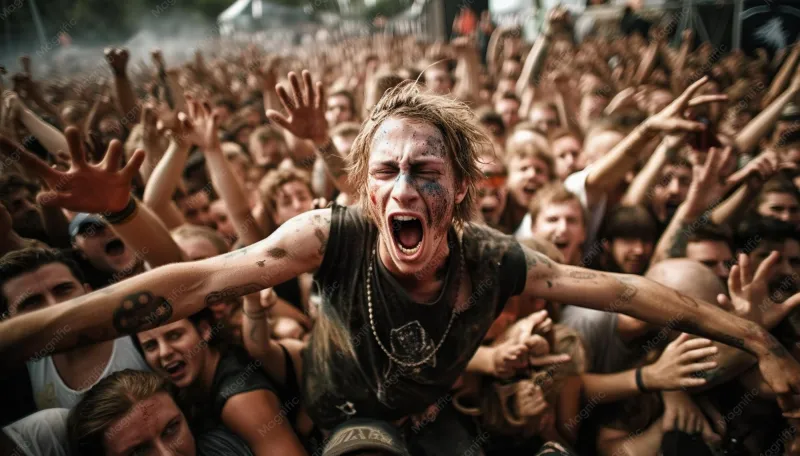
Photo: broken gate rusted music concert crowd freedom, via img.freepik.com
There was a time—not even that long ago—when a single review in Rolling Stone could make or break a rock band's career. A thumbs-down from a heavyweight critic at Pitchfork could effectively exile an album to the discount bin before it even found its audience. Music editors at a small cluster of publications held enormous, largely unquestioned influence over what rock fans heard, what they bought, and what they eventually considered important. These were the gatekeepers. And somewhere between the death of print advertising revenue and the rise of a teenager in Ohio going viral for reacting to a 1994 album on YouTube, those gates just... stopped mattering.
Good. Let's talk about why.
The Kingdom That Crumbled
To understand what's been lost—and what hasn't—you have to appreciate just how centralized rock criticism once was. Through the '70s, '80s, and into the '90s, the critical infrastructure was tight. Rolling Stone, Creem, Spin, the Village Voice, and a rotating cast of regional alt-weeklies essentially formed a court of opinion. Writers like Lester Bangs, Robert Christgau, and Greil Marcus weren't just reviewers. They were theorists, mythmakers, and cultural arbiters. They gave rock music its intellectual framework.
There's something genuinely impressive about that era, in the same way a beautifully constructed monopoly is impressive before it collapses under its own weight. The problem wasn't that these critics lacked talent—many of them were extraordinary writers. The problem was structural. When you concentrate taste-making power in a small, demographically similar group of people operating out of a few major coastal cities, you inevitably get blind spots the size of stadiums.
Bands that didn't fit the critical narrative got ignored. Genres that skewed too regional, too suburban, too working-class, or too female got condescended to. The gatekeepers weren't evil. They were just human—and their humanity came with all the biases that implies.
The Collapse Wasn't Sudden
The internet didn't kill rock criticism overnight. It was more like a slow-motion structural failure. First came music blogs in the early 2000s—scrappy, passionate, sometimes unhinged—and suddenly anyone with an opinion and a WordPress account could publish a review. The barrier to entry evaporated. For a while, the establishment tried to absorb this energy. Pitchfork rose as a kind of digital successor to the old guard, maintaining a similar air of critical authority but through a new medium.
Then social media happened. Then streaming happened. Then the algorithm happened. And somewhere in that cascade of disruption, the idea that any single publication or critic could set the agenda for what rock music mattered became not just outdated—it became genuinely absurd.
By the mid-2010s, Rolling Stone had become a brand more than a tastemaker. Alt-weeklies folded across the country. Staff critic positions at music publications became rare enough to be almost mythological. The infrastructure that had supported professional rock criticism for half a century cracked, then crumbled.
The New Critics Don't Have Press Passes
Here's where it gets interesting. The gatekeepers didn't just disappear—they got replaced. Not by a new institution, but by a sprawling, decentralized, wildly democratic ecosystem of voices that nobody appointed and nobody can fire.
YouTube reaction channels have become some of the most influential spaces in rock discovery. Watch someone genuinely hearing Led Zeppelin's When the Levee Breaks for the first time, their face doing all the things faces do when something breaks through, and you're watching music criticism in its purest form. No jargon. No agenda. Just a human being being hit by something powerful.
TikTok has created its own strain of micro-criticism—15 to 60 seconds of someone making a case for why a deep cut from a '90s alt-rock band deserves your attention right now. These aren't reviews in the traditional sense. But they're doing the same fundamental work: pointing ears toward music and making an argument for why it matters.
Reddit threads dissect albums with a forensic intensity that would make the most obsessive print critic blush. Discord servers full of fans who've never been to New York or Los Angeles are building critical frameworks for niche subgenres that the old establishment never would have touched. Substack newsletters run by passionate non-professionals are producing some of the most genuinely interesting rock writing being published anywhere.
What We Actually Lost (And It's Less Than You Think)
Fair is fair—something real did disappear when professional rock criticism collapsed. Long-form investigative music journalism, the kind that required travel budgets and editorial support and months of reporting, has become genuinely rare. The infrastructure that could send a writer on the road with a band for three weeks and publish a 10,000-word piece about what they found doesn't really exist anymore at scale.
There's also a coherence that's gone. The old critical establishment, for all its flaws, gave rock culture a shared conversational framework. You could argue about whether Pitchfork was right about a record, but at least everyone was arguing about the same record. Today's landscape is so fragmented that there may not be a single album that every rock fan has even heard of, let alone argued about.
But here's the thing: that fragmentation is also freedom. When no single voice can declare something important or unimportant, bands stop making records for critics and start making records for listeners. The anxiety of critical reception—which warped plenty of great rock artists into self-conscious, approval-seeking versions of themselves—has been largely replaced by something healthier. Make the thing. Put it out. Find the people it's for.
The Genre That Needed This Most
Rock music specifically benefits from the death of its critical establishment in ways that other genres might not. By the 2000s, rock criticism had calcified around a fairly narrow canon. The same albums got cited, the same lineages got traced, the same bands got anointed. Anything that didn't fit the established narrative of what rock was supposed to sound like got either ignored or condescended to.
The new ecosystem doesn't have that problem. A bedroom pop-punk artist from rural Tennessee can find her audience without anyone's permission. A metalcore band from the midwest doesn't need a Pitchfork review to build a following of 200,000 devoted fans. A guitarist making music that sounds like nothing else gets discovered through an algorithm that doesn't care about critical consensus—it cares about engagement, about the moment when a listener hits repeat.
Rock has always been, at its core, about circumventing the establishment. About making noise that the people in charge didn't ask for and couldn't fully control. The irony is that for about fifty years, it handed control of its own narrative to a small group of self-appointed authorities.
Those authorities are gone now. The music is still here. Louder than ever, honestly.
The Gates Are Open
None of this means criticism is dead—it means criticism is everywhere. Your friend who texts you a Bandcamp link at midnight is a critic. The commenter who writes three paragraphs about why a band's second album deserves more respect than their debut is a critic. The reactor who pauses a video to say wait, did you hear what the drummer just did? is a critic.
The gatekeepers didn't just lose their jobs. They got replaced by everyone. And for a genre that has always claimed to speak for the outsiders, the overlooked, and the loud—that feels exactly right.