Last Call for the Rock Club: America's Mid-Size Venues Are Dying, and Here's How We Save Them

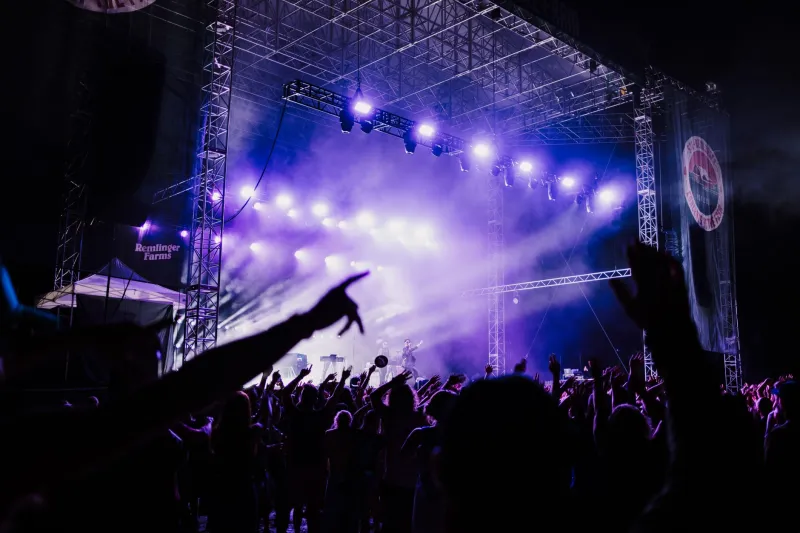
Photo: dark intimate rock music venue empty stage concert club interior, via m.media-amazon.com
The Night the Lights Went Out
Walk past 1520 N. Milwaukee Avenue in Chicago on any given Tuesday and you won't hear a thing. No feedback squeal from a guitar being tuned, no thump of a kick drum check, no crowd noise bleeding through thick walls. The building that once housed the Empty Bottle — one of the Midwest's most beloved independent rock venues — is quiet in a way that feels wrong. It's not alone.
Across the country, the clubs where rock culture actually lives — not the arena-sized monuments to legacy acts, and not the dive bar with a karaoke machine in the corner — are disappearing at a pace that should alarm anyone who cares about where the next generation of great rock bands comes from. We're talking about the 200-to-1,000-capacity rooms. The ones that smell like spilled beer and possibility. The ones that launched careers.
According to the National Independent Venue Association (NIVA), the US lost an estimated 30 percent of its independent venues during the pandemic years, and the closures haven't stopped. The reasons are layered, interconnected, and honestly kind of devastating.
The Economics Were Already Broken
Here's something most fans don't realize: running a rock club was never a great business. Margins on ticket sales are thin. Bar revenue carries most of the financial weight, which is why drink minimums and $12 beers exist. A mid-size venue in a city like Nashville or Denver might gross a few million dollars a year and still struggle to cover operating costs.
Then came the perfect storm.
Urban real estate values exploded in virtually every major American market through the late 2010s, and the neighborhoods that historically hosted rock venues — gritty, walkable, slightly sketchy-in-a-fun-way — became the exact neighborhoods developers wanted to flip into luxury condos. Venue owners who'd been renting their spaces for decades suddenly faced lease renewals with 40 or 60 percent rent increases. Many simply couldn't survive it.
"We'd been in our building for seventeen years," says Marcus Teller, who co-owned a 400-cap venue in East Nashville until it closed in 2022. "Our landlord sold to a developer. They gave us eight months notice. Eight months to find a new space in a market where every comparable building had already tripled in price. There was nowhere to go."
Layered on top of the real estate crunch: streaming economics gutted the touring income that bands rely on to fund their lives. When an emerging artist earns fractions of a cent per stream, touring isn't just promotional — it's survival. But here's the cruel irony. More artists are touring than ever, competing for the same limited number of mid-size venue slots. Booking fees have actually dropped in many markets because the supply of hungry bands willing to play for next to nothing is essentially infinite.
The Pandemic Debt Nobody's Talking About
The Save Our Stages Act, passed in late 2020, threw a lifeline to many independent venues. But "lifeline" is the right word — it kept people breathing, it didn't fix the underlying injury. Many venues took on significant debt during the shutdown period before federal relief arrived, and that debt is still being carried.
"We got the grant money, and it saved us in 2021," says one venue operator in Portland who asked not to be named. "But we'd already borrowed against everything to survive the first eight months. So we reopened carrying debt we've been paying down ever since. One bad quarter — one stretch of shows that don't sell — and we're done."
The math is brutal. A venue that books 200 shows a year might be profitable on 160 of them and break even or lose money on the other 40. That's always been true. But when you add pandemic debt service to the equation, the cushion evaporates entirely.
What Fans Can Actually Do
This isn't a eulogy. It's a call to action. And the good news is that the rock community — the actual fans, the regulars, the people who show up — have more power here than they think.
Buy your tickets in advance. This sounds almost embarrassingly simple, but it's genuinely one of the most meaningful things you can do. Venues make booking decisions based on advance sales. When a show sells well in advance, the venue can commit to future bookings with confidence. When everyone waits until the day of the show to decide, venues operate in financial uncertainty that makes long-term planning nearly impossible.
Spend at the bar. Again — obvious, but real. Bar revenue is the margin. If you're at a show and enjoying yourself, buy a drink. Buy a round for your friends. The markup on that $8 beer is what pays the sound engineer.
Join venue membership programs. An increasing number of independent venues have launched membership or supporter programs — think of it like a Patreon for your local club. For $10 or $20 a month, members often get perks like presale access, discounts, or invites to special events. More importantly, it gives venues a predictable revenue stream that doesn't depend entirely on show-by-show ticket sales.
Show up for the opener. Emerging local bands often get paid based on door count during their set. Walking in late might mean you miss the band that becomes your new favorite — and it definitely means they got paid less for the night.
Make noise online. When a venue announces it's closing, the community response matters. Local politicians respond to constituent pressure. Developers respond to public attention. Several venues across the country have been saved or temporarily reprieved because fans organized, showed up to city council meetings, and made the closure politically inconvenient for the people with the power to stop it.
The Artists Have a Role Too
Bands aren't passive observers here. Some of the most encouraging stories in the venue survival conversation involve artists making deliberate choices to support the ecosystem that built them.
More established acts are increasingly choosing to play smaller rooms when they could fill larger ones — not out of nostalgia, but out of genuine investment in keeping those rooms viable. When a mid-level band that could sell out a 2,000-cap theater chooses to do a run of shows at 600-cap clubs instead, it's a meaningful economic injection into venues that desperately need the revenue.
Local bands can also be more strategic about where they play and how they promote shows. Building a real local fanbase — the kind that shows up reliably — makes a band genuinely valuable to venue bookers, which creates leverage and longevity.
This Is Worth Fighting For
Every great rock band in American history came up through rooms like the ones we're losing. The venues aren't just nostalgia — they're infrastructure. They're where taste gets developed, where scenes form, where the next thing in rock music gets figured out in real time by people who haven't heard it yet.
The economics are hard. They were always hard. But communities have kept these places alive before through sheer collective will, and there's no reason that can't happen again. The question is whether enough people care enough to act before the last call becomes permanent.
The lights don't have to go out. Not if we show up.